The quiet belief that can follow us from childhood into adulthood
There is a particular kind of insecurity that has very little to do with whether we are actually successful, capable or loved.
It is simply a feeling.
A feeling that, somehow, we are not quite enough.
Not a good enough parent.
Not a good enough partner.
Not a good enough sibling.
Not a good enough friend.
Not quite good enough at work.
Not interesting enough to be included.

Not important enough for someone to pick up the phone.
Not loved quite enough to feel secure.
And perhaps the strangest thing about this feeling is that it can exist alongside plenty of evidence suggesting the exact opposite.
Someone can be accomplished, loved, surrounded by family and friends, good at their job and outwardly confident — and still carry a tiny voice somewhere inside that whispers:
“But what if I'm not really good enough?”
Where does that voice come from?
Our beliefs about ourselves don't suddenly appear when we reach adulthood.
They develop over years.
Childhood experiences, friendships, family relationships, school, rejection, criticism, and the times we felt included or excluded can all contribute to the story we gradually construct about who we are.
Imagine a child who regularly finds themselves on the outside of friendship groups.
The factual explanation might simply be:
I wasn't included this time.
But a child doesn't necessarily have the emotional maturity to interpret it that way.
Instead, it can become:
“They don't want me.”
And eventually:
“There must be something wrong with me.”
That is an entirely different message.
Psychologists sometimes talk about core beliefs — deeply held assumptions we develop about ourselves, other people and the world.

Once established, those beliefs can influence the way we interpret later experiences.
If somewhere inside you already sits the belief I'm not important, for example, an unanswered message might feel like far more than an unanswered message.
If you carry people don't choose me, being left out of something can hurt disproportionately.
If you believe I have to prove my worth, criticism at work can feel devastating even when you know rationally that you are very good at what you do.
The present experience touches something much older.
When mistakes become identity
Then there are the things we genuinely regret. Because none of us gets through life without making mistakes.
We lose our temper.
We say something badly.
We disappoint somebody.
We make the wrong decision.
We don't always behave like the person we'd ideally like to be. There is a profound difference, however, between thinking:
“I did something I regret.” and “I am a bad person.”
One is about behaviour. The other is about identity.
Guilt can sometimes be useful. It can encourage us to apologise, make amends, learn and behave differently next time. But endlessly punishing ourselves doesn't change the past. Perhaps part of becoming emotionally healthier is learning to say: I can take responsibility for the things I've got wrong without using them as evidence that there is something fundamentally wrong with me.
The fixer
There is another interesting way this feeling can show itself.
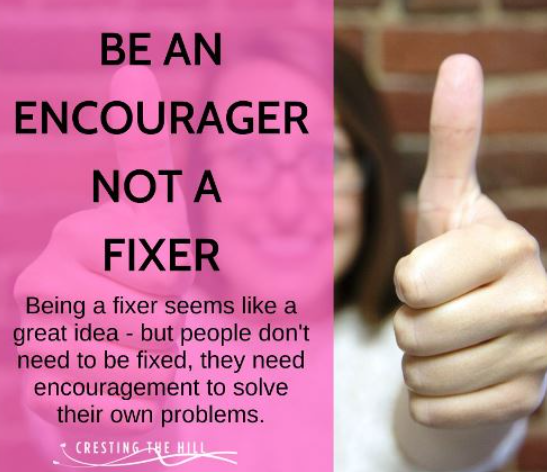
Some people become fixers.
They help. They organise. They listen. They anticipate what everybody else needs.
They try to solve problems before anyone has even asked them to.
Being generous and caring are wonderful qualities.
But occasionally it is worth asking ourselves:
Why do I find it so difficult not to fix things?
Sometimes helping others is simply kindness.
But sometimes being needed can also provide reassurance.
If they need me, I matter.
If I make things better, I'm useful.
If I'm useful, perhaps they won't leave.
That doesn't make the kindness insincere. Human motivations are rarely that simple. It just means that occasionally the person who spends their life looking after everyone else might need to turn around and ask:
Who's looking after me?
And sometimes it follows us into our dreams
Perhaps one of the most fascinating places these feelings can appear is when we're asleep. Dreams aren't secret psychological reports waiting to be decoded, and we should be wary of claiming that a particular dream definitely means a particular thing. But research does suggest that dreams can incorporate our waking experiences and emotional concerns. And sometimes there seems to be a theme. Being left behind. Everyone else being invited somewhere. Trying desperately to catch up. Being unable to find where you're supposed to be. Failing an exam. Someone you love choosing somebody else. Standing on the outside while everyone else belongs.
You wake up and realise that although the people, place and circumstances were imaginary, the emotion was incredibly familiar.
Perhaps that's the interesting part. Not necessarily what happened in the dream, but:
How did I feel in it?
Rejected?
Invisible?
Unimportant?
Not chosen?
Not good enough?
Our dreams cannot tell us who we are. But occasionally they may make us notice an emotion that has been following us around for longer than we realised.
Loneliness doesn't always mean being alone
I think this is something we misunderstand. You can experience loneliness while living with somebody. You can experience it surrounded by family.
You can have friends.
You can have colleagues.
You can laugh, work, socialise and appear completely connected to the outside world.
And still feel lonely.
Because there is a difference between having people around us and feeling emotionally seen by them.
Sometimes we don't necessarily need somebody to solve anything. We simply want to feel important to somebody. To be thought about without having to ask.
To receive the message rather than always sending it.
To be invited rather than organising.
To have somebody notice that we're not quite ourselves.
Those can sound like very small things. Emotionally, they can be enormous.
When somebody's words confirm our worst fear
This is where old beliefs can become particularly painful. Someone makes an unkind or careless remark. Perhaps they are frustrated. Perhaps they don't even realise how deeply it will land.
But if their words happen to match something we already fear about ourselves, they can go straight through us.
The comment lasts seconds.
The meaning we attach to it can last days.
We replay it.
Perhaps they're right.
And suddenly one person's words have recruited every old memory that appears to support the case against us. That's when it can help to stop and separate two things:
What was actually said?
and
What did my existing beliefs make it mean?
They are not always the same thing.
The strange contradiction of self-belief
We can also have confidence in one part of ourselves and insecurity in another.
Someone can walk into work knowing they are competent, experienced and good at what they do — yet still secretly fear being exposed as not quite good enough.
A writer can publish books and still wonder whether anyone really wants to read them.
A person can accomplish something wonderful and immediately minimise it.
Confidence isn't necessarily one switch that is either on or off.
We can believe in ourselves enormously in one area and question ourselves relentlessly in another.
Perhaps this is why creating something matters
Writing gives us somewhere to put things we don't always know how to say aloud.
So does painting.
Music.
Gardening.
Photography.
Walking.
Making things.
Creativity gives emotions somewhere to go.
For me, there is something particularly powerful about the blank page.
You can create people who feel what you have felt.
You can give them conversations you've never had.
You can let them make different choices.
You can explore love, loss, rejection, belonging, anger and forgiveness from the safety of another person's story.
And somewhere between reality and fiction, we sometimes understand ourselves a little better.
Perhaps that is why writing can feel like such a refuge.
For a while, you are no longer waiting for somebody else to tell you that you belong.
You've created somewhere that you do.
Changing the question
I don't think years of insecurity disappear because somebody tells us to “love yourself.” If only human psychology were that straightforward.
Perhaps change begins much more quietly. By noticing the story we've been telling ourselves. And questioning whether every piece of evidence really means what we've always assumed it means.
Someone doesn't call.
That doesn't mean I'm unlovable.
Someone is disappointed in me.
That doesn't make me a failure.
I make a mistake.
That doesn't make me a bad person.
I'm left out.
That doesn't mean I don't belong.
Someone doesn't express love in the way I need.
That doesn't determine my worth.
And maybe we learn something else too. We don't have to be perfect to deserve affection.
We don't have to fix everybody to deserve a place in their lives.
We don't have to spend our entire lives compensating for the child who once stood on the outside looking in.
Maybe eventually we stop asking:
“Am I good enough for them?”
And begin asking:
“Why have I spent so much of my life allowing other people to decide whether I'm good enough?”
Perhaps that's where a different story begins.
Jane Kellett BSc (Hons) Psychology
Author | Speaker | Wellbeing Writer
💗 If you enjoyed this article, subscribe to receive future blogs, wellbeing tips, cancer awareness updates and writing inspiration directly to your inbox.
Add comment
Comments